Hook Practice

Golf Hook Swing Analysis

Use SwingSmith when you are trying to understand the swing pattern behind a hook or duck hook and need one clear practice priority.

Analyze My Swing Free

Last updated: May 26, 2026

Over-curving miss, clearer checkpoint

See why the draw turns into a hook

A hook is hard to fix from feel alone because the ball flight is obvious, but the starting point can be setup, takeaway, top position, transition, face control, or release. SwingSmith turns a normal swing video into a score, P10 frame sequence, written priority, and visual analysis so the next practice session has one testable checkpoint.

Record the hook
P10 sequence
One priority
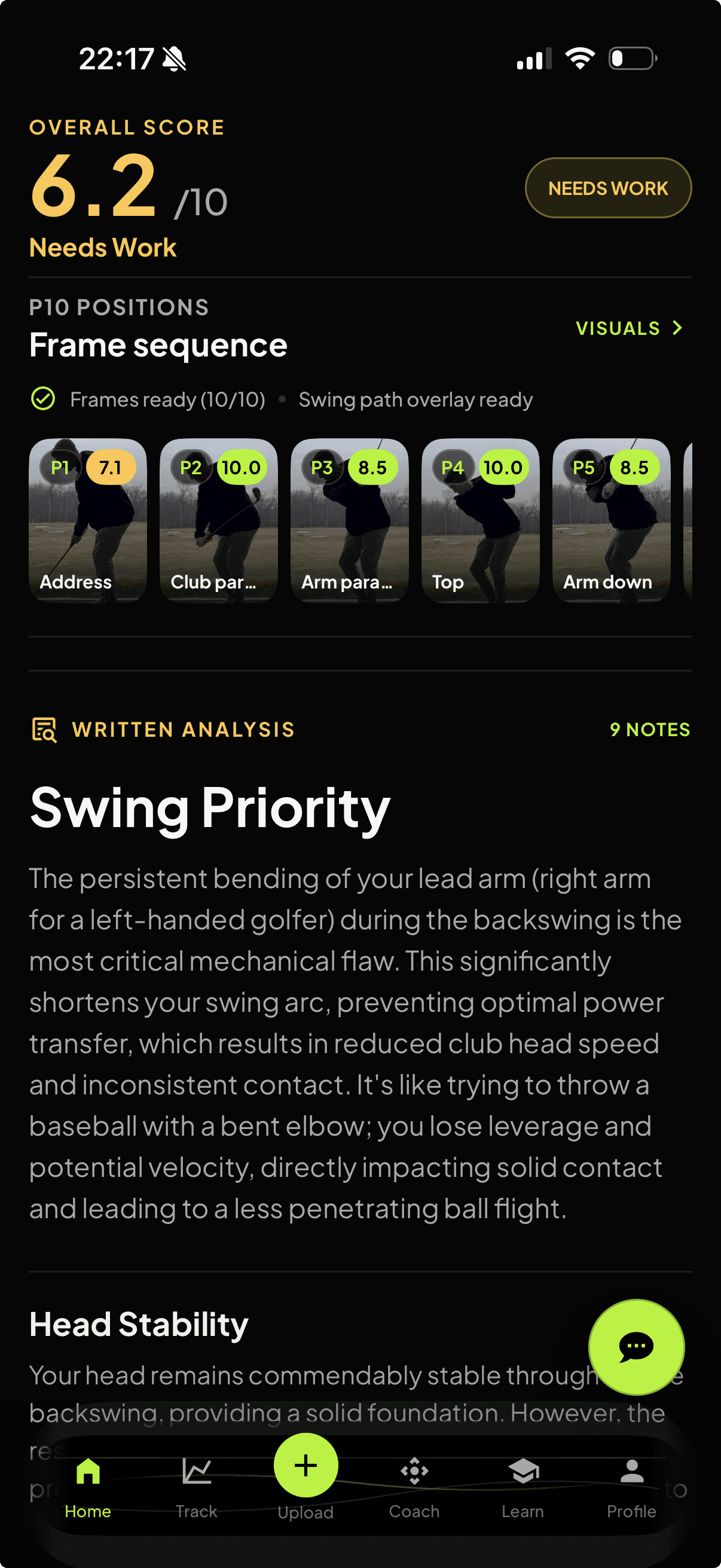
SwingSmith dark analysis screen showing P10 positions for golf hook analysis

A simple hook-practice workflow

Step 1

Record the hook

Capture the swing that over-curves instead of only filming the best ball flight. The pattern you want to fix is the one to review.

Step 2

Review the sequence

Use the score, P10 frame sequence, written priority, and visual feedback to see where the face, path, or body pattern starts.

Step 3

Practice one checkpoint

Work from one priority during the next bucket, net session, or simulator visit instead of stacking several fixes at once.

Step 4

Compare the next swing

Upload a follow-up swing when curve, start line, or contact changes so the practice loop stays tied to visible checkpoints.

What to look for before changing your swing

A hook is not always one cause

A hook or duck hook can come from face control, path, grip, setup, rotation, or timing. A useful review looks at the positions behind the ball flight.

The miss often starts before impact

Setup, takeaway, top position, transition, and release can all influence why the club arrives closed or too far from the intended path.

One change is easier to test

Trying to fix grip, path, release, and tempo in one session makes progress hard to read. One visible priority creates a cleaner test.

Good fits

  • Golfers whose draw turns into a hook or duck hook under pressure.
  • Players seeing pulls, over-curving shots, or inconsistent contact patterns that are hard to explain from feel alone.
  • Range and simulator practice where ball flight needs a movement checkpoint beside it.
  • Lesson prep when a coach and player need the same swing positions in front of them.

Start with the swing that hooks

Upload the miss and practice from one priority

Install SwingSmith, upload a clear swing video, and use the analysis to decide what to test at the next range, net, or simulator session.

Frequently asked questions

Can AI swing analysis help me understand a golf hook?

It can help by turning a swing video into checkpoints, a P10 sequence, and one practice priority. A coach still matters, but video-backed feedback can make the recurring hook pattern easier to discuss and test.

Does SwingSmith give one generic hook fix?

No. The stronger workflow is to analyze the swing video and focus on the checkpoint that appears most important, rather than giving every player the same grip or release tip.

Should I upload a good swing or the swing that hooks?

Upload the normal miss you want to understand. If the hook shows up during practice or play, that swing gives the clearest evidence for the next checkpoint.

Can I use this with a home net if I cannot see the full ball flight?

Yes. Home-net video can still show setup, takeaway, top position, transition, impact, and release checkpoints. If you also have range or simulator video, compare the same camera angle over time.

Do golfers upload swings on this website?

No. Swing analysis runs inside the iOS and Android app so uploads, results, history, and coaching tools stay connected.

Explore SwingSmith

Start with the core app, analyzer, coach, and support paths. Specific swing-topic pages stay linked from the articles where they are most useful.

Analyze My Swing Free